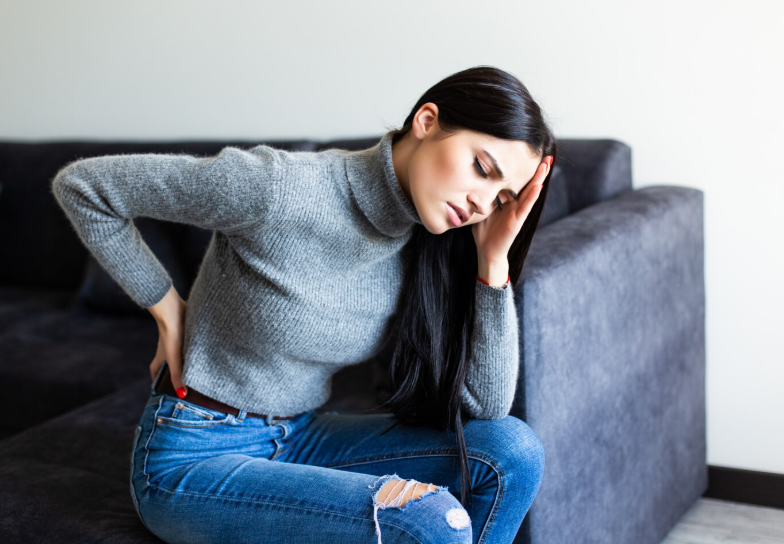
What is Lumbar Spondylitis?
Lumbar spondylitis refers to age- or posture-related changes in the lower back (L1–L5/S1). Discs slowly lose water, facet joints stiffen, and tiny osteophytes (bony spurs) may appear. Consequently, people may notice low back pain, morning stiffness, reduced bending, and sometimes nerve irritation that radiates into the buttock or leg (sciatica). Fortunately, with individualized homeopathy, graded movement, core-hip strengthening, ergonomic upgrades, and sleep anchors, comfort and confidence usually return.
What are common causes Lumbar Spondylitis?
Back pain rarely stems from one cause. Usually, several contributors stack up:
- Prolonged sitting and forward-flexed posture (laptops, two-wheel commutes, long office hours).
- Weak core and glutes with tight hip flexors, hamstrings, and thoracolumbar fascia.
- Age-linked disc wear and micro-instability between segments.
- Previous injury (lifting, falls, sports) leading to sensitized tissues.
- Occupational load: driving, teaching, nursing, tailoring, retail, or construction.
- Vitamin D deficiency and low protein intake, delaying tissue repair.
- Chronic stress and poor sleep, which heighten pain perception.
- Climate triggers: Kerala’s humidity and heat can amplify stiffness and fatigue.
Homeopathy Approach to Lumbar Spondylitis treatment in Thiruvananthapuram & Kanyakumari District
At Shine Clinic, we blend individualized homeopathy with physiotherapy principles and ergonomic coaching. We don’t hand over a one-size protocol; instead, we build your plan around your pain map, workload, and climate.
How we build your plan
- Whole-person history: onset, aggravating postures, morning stiffness, stair tolerance, red-flag screening, activity level, sleep, stress loops, and bowel/urine patterns.
- Report review (with your clinician/physio): X-ray/MRI if indicated, Vitamin D/B12, thyroid panel, inflammatory markers when symptoms suggest.
- Constitutional remedy selection: matched to your signature—aching/tearing/stitching pain, weather sensitivity, heat/cold preference, nerve features, and mood tone.
- Movement scaffold: phased mobility, core-hip strength, glute activation, hamstring/hip-flexor balance, and breath-paced progress suited to Kerala’s humidity.
- Ergonomics + micro-breaks: sit-stand cues, neutral spine drills, lifting technique, and 2–3-minute posture breaks every hour.
- 4-Pillars routine: Plate (protein-forward, fiber-rich), Pulse (graded movement), Pause (2–4-minute breath resets), Pillow (sleep anchors + mattress/pillow guidance).
- Follow-ups: short, focused reviews to refine remedy timing, progress exercises, and remove barriers (commute, caregiving, shift work).
We integrate with medical care. When analgesics, nerve-specific meds, injections, or surgery are essential, we support comfort, habits, and recovery—not replace necessary treatment.
What are the types of Lumbar Spondylitis?
- Mechanical/axial low back pain: local stiffness and ache, worse with prolonged sitting or bending.
- Facet-dominant pain: aggravated by extension/rotation; paraspinal tenderness.
- Discogenic pain: deeper, sitting-intolerant pain with intermittent “catching.”
- Lumbar radiculopathy (sciatica): nerve root irritation → buttock/leg pain, tingling, or numbness.
- Myofascial pain: trigger points in quadratus lumborum, glute medius, or piriformis.
- Post-traumatic spondylosis: after falls/accidents; often mixed with muscle guarding.
What are the signs of Lumbar Spondylitis?
- Morning or start-up stiffness that softens with gentle movement
- Ache after sitting or long drives; relief on standing or walking
- Pain on bending/extension; “catch” on sudden twists
- Buttock/leg radiation (possible sciatica)
- Tight hamstrings and hip flexors; weak glutes
- Sleep disruption with wrong mattress/pillow or late screens
Red flags (seek prompt clinical review): trauma with severe pain, fever with back pain, progressive leg weakness, saddle numbness, bowel/bladder changes, or unexplained weight loss.
What are the test for Lumbar Spondylitis?
Your clinician may advise:
- X-ray: disc height, osteophytes, alignment, spondylolisthesis.
- MRI: disc bulge/herniation, foraminal stenosis, Modic changes, nerve compression.
- Blood tests (as indicated): Vitamin D/B12, thyroid panel, CRP/ESR.
- Nerve studies for persistent radiculopathy.
- Functional assessment by a physiotherapist (movement control, strength balance).
How do you diagnose Lumbar Spondylitis?
Diagnosis combines history, functional exam, and investigations. At Shine Clinic, we turn findings into an actionable 8-week roadmap:
- Week 1–2 – Calm & protect: begin individualized homeopathy; adopt pain-respecting mobility (pelvic tilts, knee-to-chest, cat-camel); set hydration cadence; practice hip-hinge for daily tasks.
- Week 3–4 – Activate & align: add core bracing, dead bug, bird-dog, glute bridges, hinge drills, hamstring/hip-flexor balance; take sit-stand micro-breaks every hour.
- Week 5–6 – Strength & stamina: progress to side planks, single-leg bridges, wall sits, band rows, farmer carry with neutral spine; rehearse lift-and-carry safety.
- Week 7–8 – Maintain & expand: integrate brisk walks (shade/indoors), light intervals, mobility flows, and 2–4-minute breath resets; refine pillow/mattress setup.
What are the signs and symptoms of Lumbar Spondylitis?
Symptoms often ebb and flow with posture, load, sleep, and weather:
- Start-up stiffness after long sitting; relief with gentle walking
- Deep lumbar ache on heavy housework or long rides
- Buttock/leg tingling after prolonged flexion
- Tight band across the lower back by evening; better after heat or stretching
- Irritability and fatigue from poor sleep or late salty/spicy dinners
- Next-day echo pain after a strenuous day, especially without breath-led recovery
Benefits of Alternative medicine for Lumbar Spondylitis
Used alongside medical and physiotherapy care, homeopathy can make back care gentler and more sustainable:
- Personalization: remedies reflect pain character, weather sensitivity, nerve features, heat/cold preference, and mood tone.
- Low side-effect profile: easier adherence around work, travel, and rehab sessions.
- Habit design: we convert advice into Plate–Pulse–Pause–Pillow routines you can keep—even during deadlines or festival weeks.
- Recovery literacy: you learn posture breaks, micro-movement snacks, and breath resets that reduce guarding without flares.
- Confidence & consistency: short, friendly check-ins protect momentum so benefits compound.
What are Lumbar Spondylitis risk factors and complications?
Risk factors
- Sedentary work, long commutes, prolonged screens
- Weak core and glutes with tight hip flexors/hamstrings
- Obesity and low protein intake
- Vitamin D deficiency, poor sleep, chronic stress
- Past lifting injuries or contact sports
- Smoking and inactivity that slow tissue recovery
Potential complications (if unmanaged)
- Recurrent flares and productivity loss
- Radiculopathy with persistent leg pain or numbness
- Fear of movement, leading to deconditioning
- Sleep debt and mood dips
- Reduced quality of life and dependency on painkillers
What are Lifestyle and home remedies for Lumbar Spondylitis
Small, repeatable actions shift the trajectory—especially in our coastal climate.
Plate (tissue-wise nutrition)
- Protein + fiber each meal: dals/legumes, eggs/lean meats if you eat them, paneer/tofu, curd, nuts/seeds—support repair and muscle retention.
- Color & minerals: leafy greens, gourds, citrus; groundnut/sesame oils with limited coconut; fish if part of your diet.
- Hydration cadence: steady sips; aim for pale-straw urine by evening.
- Sodium sense: cook fresh; minimize packaged snacks that worsen stiffness and sleep.
- Vitamin D & calcium support: food-first; coordinate supplements with your clinician.
Pulse (movement that heals—not harms)
- Daily mobility (5–8 minutes): pelvic tilts, cat-camel, knee-to-chest, lumbar rotations.
- Core-hip strength: dead bug, bird-dog, glute bridge, side plank progressions.
- Hinge & carry skills: hip-hinge for chores, farmer carry with neutral spine, split-stance pickups.
- Walks & intervals: 20–30 minutes most days; choose shade or indoor tracks to beat humidity.
- Footwear: supportive shoes; retire worn soles; consider simple insoles if advised.
Pause (nervous-system calm)
- 2–4-minute breath-work (longer exhale) morning, midday, and evening.
- Micro-breaks every hour: stand, hinge, extend, look far into the distance.
- Stress buffers: short music breaks, gratitude jotting, or a 60-second body scan.
Pillow (sleep that repairs)
- Fixed wake time; cool, dark bedroom; cotton bedding.
- Mattress tune-up: medium-firm usually suits; add a topper if needed for hips/shoulders.
- Position aids: pillow under knees (supine) or between knees (side-sleep) to unload the lumbar spine.
- Wind-down ritual: dim lights; gentle stretches; avoid very late heavy dinners.
Is Homeopathy treatment good for Lumbar Spondylitis
Homeopathy for Lumbar Spondylitis can be supportive and patient-centred, especially for stiffness, activity-linked pain, sleep, and stress handling—alongside appropriate medical and physiotherapy care. People value the individualization and habit design that transform advice into daily routines. We don’t claim instant cures; nevertheless, with graded movement, ergonomic upgrades, Kerala-smart pacing, and consistent follow-ups, comfort returns and capacity grows.
Best Homeopathy clinic for Lumbar Spondylitis in Thiruvananthapuram & Kanyakumari District
Families choose Shine Clinic for clear communication, practical plans, and flexible access—in-clinic, phone, WhatsApp, and online. Our strategies respect Kerala’s humidity, festival seasons, and commute patterns across Thiruvananthapuram and the Kanyakumari District. Because progress depends on consistency, our follow-ups stay short, kind, and focused on do-this-today wins you can keep all year.
Why Shine Clinic & Dr Merlin Sheema for Homeopathy Lumbar Spondylitis Treatment in Thiruvananthapuram, Kerala & Kanyakumari District of Tamil Nadu
With Dr Merlin Sheema and the Shine Clinic team, you receive:
- Personalized plans shaped by your posture demands, scans, routines, and goals—not a template.
- Collaborative care with orthopedicians and physiotherapists for diagnostics and safety.
- Climate-wise strategies: hydration cadence, heat-smart pacing, and monsoon-proof mobility.
- Ergonomic coaching: desk/phone/driving fixes, lift-and-carry skills, bag and footwear guidance.
- Practical tools: exercise handouts, habit trackers, break timers, and progress checkpoints.
- Flexible follow-ups: brief, encouraging reviews that protect momentum without derailing your day.
Your next step
Your back should carry your life—not your worries. With Homeopathy for Lumbar Spondylitis, ergonomic upgrades, climate-wise pacing, deep-core strength, and sleep-first routines, you can expect less pain and more freedom. If you live in Thiruvananthapuram or the Kanyakumari District, Shine Clinic will help you turn scattered tips into a simple, week-by-week plan—without harsh rules, without overwhelm, and with warm, steady support.
Call or message Shine Clinic to book an in-clinic visit or a quick phone/online consultation. Together, we’ll map your pain, refine your routine, select supportive remedies, and protect progress—one practical win at a time.